
Gloves
Winter work gloves: stay warm without losing grip
· 5 min read · Hardpoint Safety
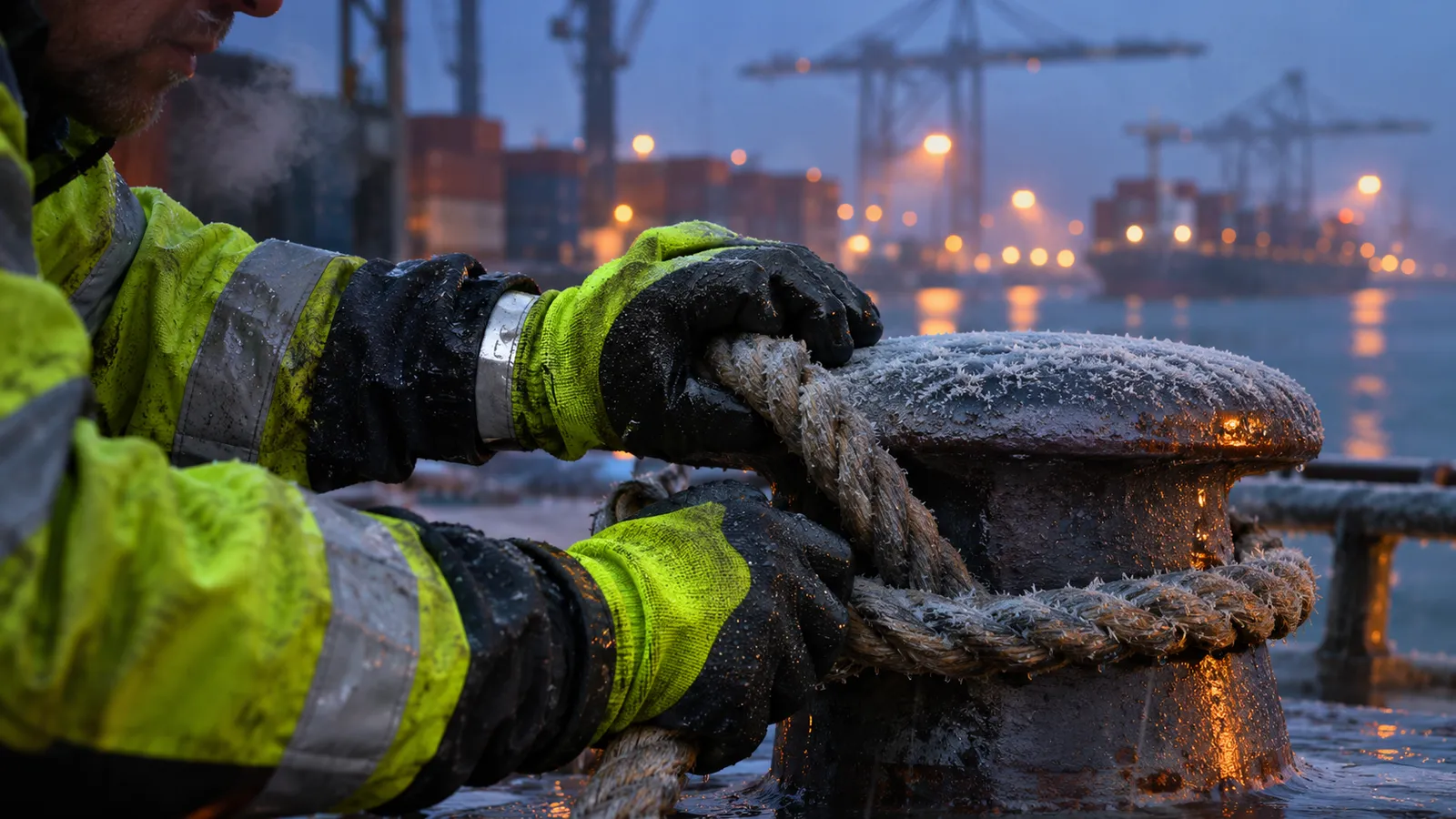
January, half past six in the morning, Rotterdam harbour. The temperature is two degrees above freezing, but the sea wind makes it feel like minus five. A deckhand needs to secure a mooring line. His thick gloves make it impossible, so he takes them off.
Five minutes later, his fingers are stiff. He can barely feel the rope. And that is exactly when most accidents happen.
A good pair of winter gloves solves that dilemma. It keeps your hands warm and still lets you work. Here is how to choose one.
At a glance
- Cold hands are caused not just by low temperatures, but especially by wind and moisture.
- Check the EN 511 code to see how well a glove protects against cold and water.
- Choose a coating that stays flexible in the cold, or you may lose your grip.
- Gloves that are too tight can leave your hands colder than a well-fitting pair.
Why your hands get cold
The thermometer only tells half the story. Wind strips away the warm layer of air around your hands. Getting wet is worse: water carries heat away about 25 times faster than air. That is why a wet glove at five degrees can feel colder than a dry one at minus five.
Standing still makes a difference too. Heavy work generates body heat. Waiting in one place for the crane to move does not.
The trade-off: warmth versus feel
The thicker the lining, the warmer the glove. But the less you can feel, too. You need fingertip control to handle a lashing strap or shackle.
That is why the thickest glove is rarely the best choice. Pick the thinnest glove that keeps you warm enough for your work. If you switch between precise tasks and long waits, two pairs often work best: a thinner pair for the job and a warmer pair for breaks.
Reading the EN 511 code
Winter gloves carry an EN 511 code. EN stands for European Standard. The code has three digits:
- The first digit rates protection from convective cold, including wind, from 0 to 4.
- The second rates protection from contact with cold surfaces such as steel or ice, from 0 to 4.
- The third is about water: 1 means no water penetrates within 30 minutes, while 0 means it does.
An X means the glove was not tested for that part.
For example, EN 511 121 means some protection from cold air, good protection from cold surfaces, and waterproofing. If you handle cold steel all day, pay particular attention to the second digit.
Grip in the cold
Not every coating behaves the same way in freezing conditions. Some materials turn stiff and slick when the temperature drops. Latex stays relatively flexible and grips well on wet, rough surfaces. That is why many winter gloves have a latex palm, sometimes with two layers for extra grip and water resistance.
Oil and grease change the equation. Feel free to ask us for advice.
Dry means warm
A glove can be water-repellent or waterproof. Water-repellent gloves hold off a shower for a while. Waterproof gloves keep your hands dry even if you reach into a bucket. Check the third digit of the EN 511 code if you need to be sure.
It also matters how you dry your gloves after work. Let them dry slowly, not on a radiator. Heat can make coatings and leather hard. If you work in wet conditions all day, bring a second pair for the afternoon.
Check the fit
A winter glove that is too tight compresses its lining. That leaves no air between the fibres, and that trapped air is what keeps you warm. Tight gloves can also restrict blood flow to your fingers. Start with your usual size. If you are between sizes, go for the roomier fit in a winter glove.
Which winter gloves for which job?
| Work | What to look for |
|---|---|
| Fine outdoor work | Thin lining, close fit and good fingertip grip |
| Rigging and heavy work | Durable coating and protection on the back of the hand |
| Handling sharp materials | Cut protection in the EN 388 code, plus a lining |
| Working in the dark | Reflective details to make your hands visible |
| Wet work | Waterproofing, with a 1 as the third EN 511 digit |
Our winter gloves
We work with Norwegian brand Granberg. Its gloves are made in Bjoa on Norway's west coast, where winters are long and the rain rarely falls straight down. Our range includes winter gloves for general work, cut protection, impact protection and low-light work, with a reflective cuff. Each product page lists the standards so you can compare them easily.
Browse our winter gloves, or email us if you are unsure. We are happy to help.
The deckhand from the opening story did not need a thicker glove. He needed a better one.