
Gloves
Choosing work gloves: risk, standards and fit
· 5 min read · Hardpoint Safety
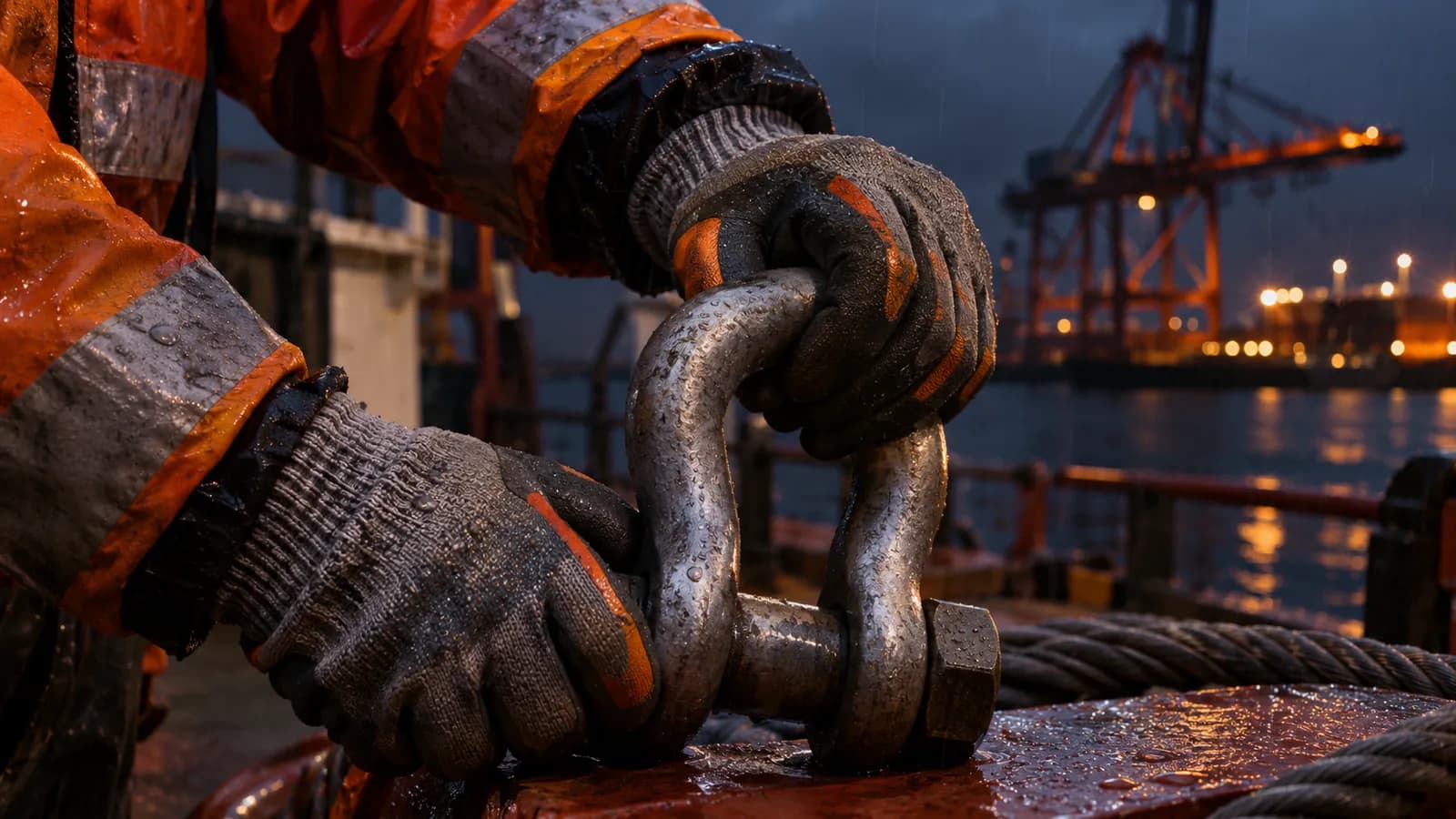
A rigger is standing on a wet deck, picking up a heavy shackle. The steel is cold and slick. His gloves have to do three jobs at once: give him grip, keep his hands warm and protect his knuckles if the load starts to swing.
No glove does everything well. So do not start with the brand or the price. Start with the job. First the risk, then the standards, and only after that the fit and grip.
At a glance
- Identify the main risk first: cuts, impact, heat or cold.
- Then check the standards on the glove. EN 388 covers mechanical risks, EN 407 heat and EN 511 cold. EN stands for European Standard.
- For cut protection, look at the letter in the EN 388 code: A is the lowest level and F the highest.
- After that, choose for fit and grip. If you are unsure about the size, try a pair before ordering.
Start with the risk
Ask yourself one question: what could happen to my hands on a bad day? That is the risk your choice should address.
If you work with sheet metal, glass or rebar, cuts are the danger. If you are attaching loads to a crane, impacts and crush injuries are more likely. If you spend all day outside in November, cold becomes the priority.
For fine assembly work, the biggest risk may be something else: taking your gloves off because you cannot feel what you are doing. It may sound like a joke, but it happens every day. A glove in your pocket protects nothing.
Which risk, which glove?
| Risk | Choose | Look for |
|---|---|---|
| Cuts | Cut-resistant | Letter C to F in the EN 388 code |
| Impact and crushing | Impact-resistant | A P after the EN 388 code |
| Cold and wet | Winter | EN 511 code and waterproofing |
| Fine work | Assembly and all-round | Close fit |
Reading the standards
Good work gloves carry standard codes, usually on the back of the glove or the cuff. They may look like a secret language, but they are not. Once you understand them, choosing gets a lot quicker.
EN ISO 21420 is the foundation. It sets general requirements for materials, fit and sizing. ISO is the international standards organisation.
EN 388 covers mechanical risks. The first four digits show abrasion resistance, cut resistance under the coup test, tear resistance and puncture resistance. A letter from A to F follows, showing cut resistance under the TDM test. This uses a tomodynamometer, a method better suited to modern cut-resistant yarns. If there is a P at the end, the glove has also been tested for impact protection.
EN 407 covers heat and flame, with six digits that include contact heat performance.
EN 511 covers cold, with three digits for convective cold, contact cold and water resistance.
An X always means the same thing: not tested.
Example: EN 388 4X43CP
- 4: abrasion resistance, the highest level.
- X: not tested for cut resistance under the coup test. That is normal with cut-resistant yarns because they can blunt the blade. Check the letter instead.
- 4: tear resistance, the highest level.
- 3: puncture resistance, level 3 out of 4.
- C: level C cut protection under the TDM test, at least 10 newtons.
- P: passed the impact test on the knuckles and back of the hand.
In short: tough, tear-resistant, suitable for everyday cut protection when working with steel, and able to take a knock.
Fit and grip
A glove that does not fit will come off. Too large, and you lose grip and feel. Too small, and your hands tire and get cold more quickly because the lining is compressed.
Close-fitting gloves give you more feel for fine work. A roomier fit is more comfortable for heavy work or when the glove has a thick lining.
Also check the coating on the palm. Latex grips well on wet and rough surfaces. Nitrile holds up better around oil. Foam feels soft and lets your hand breathe.
Not sure about the size? Try a few sizes before ordering a whole box. Or email us and we will help you choose.
Why we work with Granberg
Granberg has been making work gloves since 1961 in Bjoa, a small village on Norway's west coast. It is often windy and rainy there. You can see that in the gloves: they are made for working in cold and wet conditions, all day long.
We sell Granberg and no other glove brand. We would rather know one brand inside out than know ten brands only a little. Each product page lists the standards, specifications and packaging, so you know exactly what you are buying.
The best compliment you can give a work glove? Forgetting you are wearing it by the end of the day.